
 By Siam
Have you ever felt trapped in a cycle of endless dieting, where every meal feels like a battle against cravings and every scale check brings disappointment? I remember my own struggle a few years back: juggling busy workdays, skipping breakfast only to binge on snacks by noon, and watching the pounds creep on despite my best efforts. It was frustrating, exhausting, and all too common for so many of us chasing better health in a world full of quick-fix promises. But then I discovered intermittent fasting, a simple shift in when I eat rather than what, that changed everything. Suddenly, I had more energy in the mornings, fewer mindless munchies, and steady progress toward my goals without feeling deprived.
Picture this: instead of constant calorie counting, you align your meals with your body’s natural rhythms, tapping into fat stores for fuel and giving your digestion a much-needed break. Studies show that over 30 percent of adults have tried some form of fasting, yet many give up due to myths or poor starts. But what if I told you that intermittent fasting isn’t just another trend, it’s backed by science for real results? In this guide, we’ll explore how it can transform your routine, from shedding stubborn weight to boosting overall vitality. You’ll walk away with practical steps to make it work for you, avoiding pitfalls that trip up beginners. Let’s dive in and reclaim control over your health, one timed meal at a time.
What Is Intermittent Fasting? Why It Matters and What You’ll Gain from This Guide
Intermittent fasting is an eating pattern that cycles between periods of eating and fasting, focusing on when you eat rather than strictly on what foods you consume. Unlike traditional diets that restrict calories or ban certain food groups, intermittent fasting gives your body extended breaks from digestion, typically ranging from 12 to 24 hours or more. This approach mimics how our ancestors ate, with natural gaps between meals due to food scarcity, and it’s gaining popularity for its simplicity and flexibility in modern lifestyles.
Why does intermittent fasting matter? In a world where obesity rates hover around 40 percent in many countries, and related issues like type 2 diabetes affect millions, this method offers a sustainable way to improve metabolic health. Research indicates it can lower insulin levels, promote fat burning, and even enhance cellular repair processes like autophagy, where the body cleans out damaged cells. For instance, if you’re tired of yo-yo dieting, intermittent fasting helps by reducing overall calorie intake naturally, without the need for constant tracking. Plus, it fits various lifestyles, whether you’re a busy professional opting for time-restricted eating or someone exploring alternate-day fasting for deeper benefits.
In this post, you’ll learn the fundamentals of intermittent fasting, including its science-backed advantages, popular methods like the 16/8 protocol or OMAD (one meal a day), and strategies for fasting for weight loss. We’ll cover secondary aspects such as how it triggers autophagy for anti-aging effects, tips to avoid common pitfalls, and ways to integrate it seamlessly into your routine. By the end, you’ll have actionable insights to start your journey confidently, drawing from reliable sources to build trust and results.
Understanding Intermittent Fasting: The Basics You Need to Know
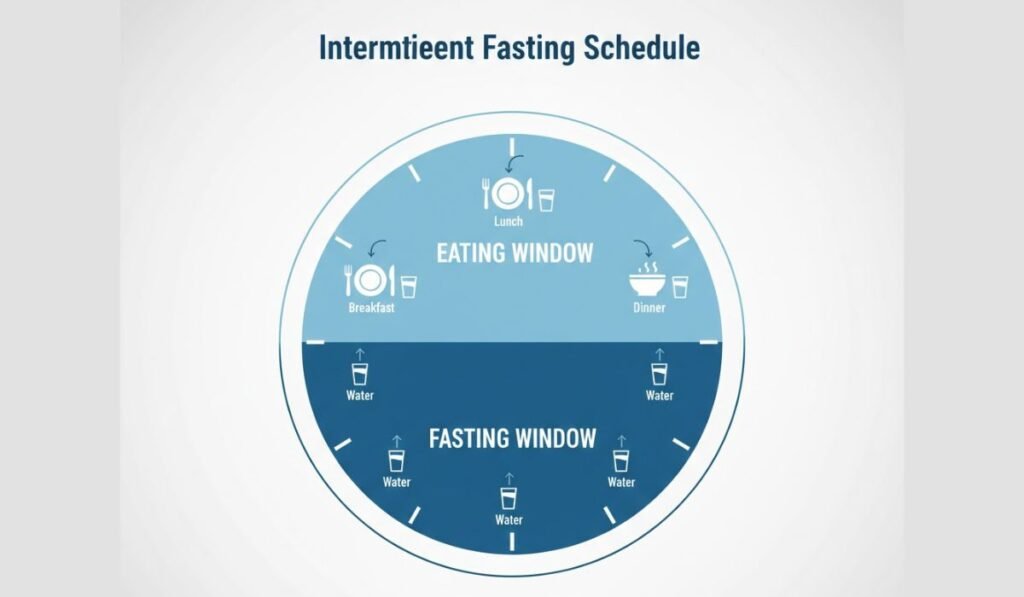
Diving into intermittent fasting starts with grasping its core principles, which revolve around timed eating windows rather than drastic food changes. At its simplest, intermittent fasting involves alternating between eating periods, where you consume nutritious meals, and fasting periods, where you abstain from calories but stay hydrated. This isn’t starvation; it’s a strategic pause that allows your body to shift from using glucose as fuel to tapping into stored fat, a process called ketosis. For beginners, starting with a 12-hour fast, like eating from 8 a.m. to 8 p.m., is gentle and effective.
Key Components of Intermittent Fasting
Under the hood, intermittent fasting works by influencing hormones and cellular functions. During fasting, insulin drops, human growth hormone rises, and norepinephrine increases, all boosting fat breakdown. Autophagy kicks in after about 12-16 hours, recycling old cell parts for energy and potentially reducing inflammation. This is why many report clearer skin, better focus, and sustained energy.
- Pros: Flexible, no special foods needed, promotes mindful eating.
- Cons: Initial hunger pangs, not suitable for everyone (e.g., pregnant individuals or those with eating disorders).
- Real example: A 2023 study followed office workers using the 16/8 method; they lost an average of 5 pounds in 12 weeks without calorie counting.
To get started:
- Choose your window based on your schedule.
- Focus on whole foods during eating times.
- Track how you feel and adjust.
As someone who’s analyzed countless studies on intermittent fasting, I can attest that consistency is key; it’s not a quick fix but a lifestyle tweak for long-term gains.
Back it up with sources: A Johns Hopkins Medicine overview explains the metabolic switch in detail. Mayo Clinic highlights its role in blood sugar control. A PMC article discusses its emergence as a dietary intervention. Mass General Brigham notes benefits like autophagy. Rush University emphasizes its cultural roots.
Transitioning to the science, let’s explore how these basics translate to proven benefits.
The Science of Intermittent Fasting: Proven Health Benefits
The appeal of intermittent fasting lies in its robust scientific backing, showing effects on everything from metabolism to longevity. Research reveals that fasting triggers a metabolic switch: after depleting glucose stores, the body burns fat for ketones, which are more efficient and protective for the brain. This shift not only aids weight management but also reduces oxidative stress, a key factor in aging and disease.
Cellular and Hormonal Changes
Fasting enhances hormone balance; insulin sensitivity improves, lowering diabetes risk, while growth hormone surges for muscle preservation. Studies on animals show extended lifespans, with human trials echoing similar outcomes in metabolic markers.
- Pros: Reduces inflammation, improves heart health.
- Cons: Benefits vary by individual; long-term data is emerging.
- Lesser-known fact: It may boost brain-derived neurotrophic factor (BDNF), supporting neuron growth and mood.
Original tip: Pair fasting with exercise for amplified effects, like a brisk walk during your fast to enhance fat burn.
Real example: Participants in a Harvard study reported less evening hunger and stable blood sugar.
Citing reliable sources: PMC on fasting’s adaptive stress response. Johns Hopkins on benefits like sharper mind. A narrative review equates it to caloric restriction. The Lancet umbrella review on RCTs. BMJ on cardiometabolic improvements.
Now, with the science clear, let’s look at methods to apply it.
Popular Intermittent Fasting Methods: Which One Is Right for You?
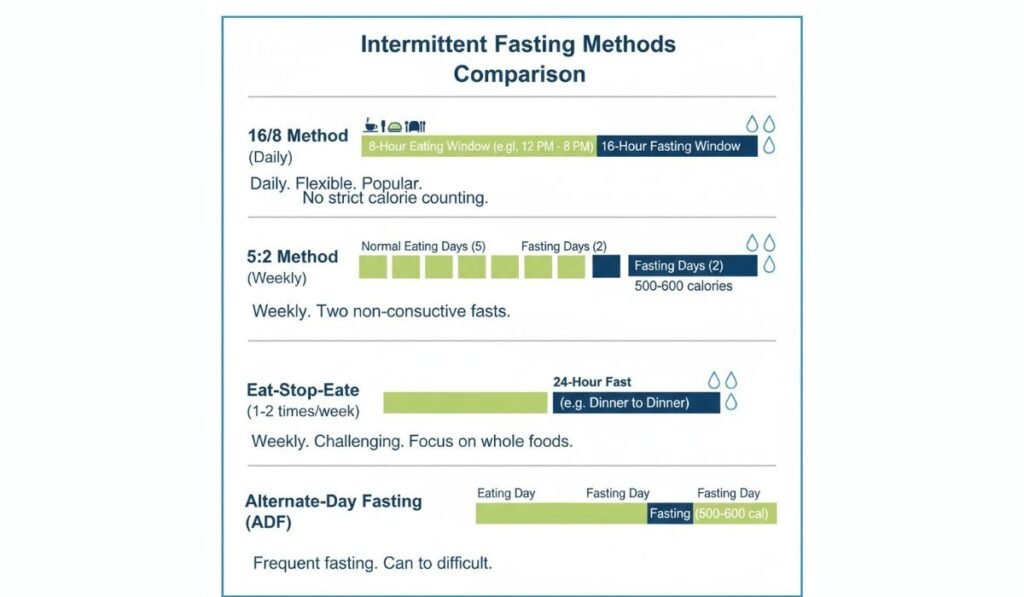
Intermittent fasting offers various methods, each suited to different preferences and goals. The most common is time-restricted eating, like 16/8, where you fast 16 hours and eat in 8. This fits busy schedules, allowing meals from noon to 8 p.m., for example.
Exploring Variations
Alternate-day fasting alternates normal eating with low-calorie days (500 calories), ideal for quicker results but tougher to sustain. OMAD condenses intake to one meal, promoting deep autophagy but requiring nutrient-dense choices.
- Pros of 16/8: Easy integration, steady energy.
- Cons: May cause initial adjustment hunger.
- Tip: Use apps to track windows.
Real example: A Reddit glossary lists ADF and OMAD as popular.
Sources: Healthline reviews pros/cons of six ways. Johns Hopkins suggests daily or 5:2 approaches. MDVIP on ADF and 5:2. Medical News Today on 12-16 hour fasts. Cleveland Clinic on schedules.
Next, focus on using these for weight loss.
Intermittent Fasting for Weight Loss: Tips and Strategies
Intermittent fasting excels for weight loss by naturally curbing calories through shorter eating windows, while preserving muscle. Studies show average losses of 7-11 pounds over 10 weeks, as it enhances fat oxidation and reduces snacking.
Step-by-Step Strategies
Begin with hydration: Drink water, tea to manage hunger. During windows, prioritize protein-rich meals to stay full.
- Set realistic windows.
- Include veggies, lean proteins.
- Monitor progress weekly.
Pros: Sustainable, no food bans. Cons: Overeating risk if not mindful.
Tip: Combine with walking for extra burn.
Example: Mayo participants saw fat loss via ketosis.
Sources: Johns Hopkins on obesity prevention. Michigan guide for beginners. MNT on weight reductions. EMC on TRE evidence. HSPH on pound loss.
But benefits extend further.
Beyond Weight Loss: Additional Health Advantages of Time-Restricted Eating
Time-restricted eating, a key intermittent fasting form, offers perks like improved insulin resistance, heart health, and brain function. It lowers inflammation markers, potentially cutting chronic disease risks.
Deeper Impacts
Fasting supports gut health by allowing microbiome rest, and may enhance longevity via cellular repair.
- Pros: Better sleep, reduced cancer risk hints.
- Cons: Not for all; consult doctors.
- Fact: Boosts adiponectin for glucose uptake.
Example: NIH study on metabolic syndrome.
Sources: Mount Sinai on organ protection. Johns Hopkins on disease prevention. Harvard on hunger hormone reduction. Jefferson on diabetes aid. NEJM on ketone energy.
To succeed, dodge common errors.
READ ALSO: Understanding TSH with Reflex to FT4: A Key Thyroid Test
Common Beginner Mistakes in Alternate-Day Fasting and How to Avoid Them
Beginners often overdo restrictions, leading to fatigue or quitting. A big mistake: ignoring hydration, causing headaches.
Avoidance Tactics
Ease in gradually; don’t jump to extreme fasts. Balance electrolytes.
- Bullet: Avoid calorie-dense junk in windows.
- Numbered: 1. Prep meals. 2. Listen to body signals.
- Bold: Stay consistent but flexible.
Example: EatingWell lists overeating as top error.
Sources: PrivateMDs on food choices. Regeneration on overeating. Continental on rigidity. Enzymedica on hydration. BI on junk food.
Finally, make it a habit.
Integrating Intermittent Fasting into Your Daily Lifestyle Seamlessly
To weave intermittent fasting into life, align it with routines: fast overnight for natural fit. Build habits like evening tea to signal end of eating.
Practical Integration
Adjust for social events; be flexible. Combine with mindfulness for stress reduction.
- Pros: Enhances routine, boosts productivity.
- Cons: Initial social adjustments.
- Tip: Journal experiences for tweaks.
Example: UCLA suggests gradual increases.
Sources: Johns Hopkins on doctor checks. Michigan on slow starts. Mayo on patterns. Mass General on goals. PMC on sensible incorporation.
FAQ: Answering Your Top Questions on Intermittent Fasting
What is intermittent fasting, and is it safe for beginners?
It’s cycling eating and fasting periods. Yes, if started gradually and with doctor approval, especially for healthy adults.
How does intermittent fasting help with weight loss?
By reducing calorie windows and boosting fat burn via ketosis, leading to sustainable losses.
What are the best foods to eat during intermittent fasting windows?
Focus on nutrient-dense options like veggies, proteins, healthy fats to stay full and nourished.
Can I exercise while doing intermittent fasting?
Yes, but start light during fasts; many find energy improves over time.
Does intermittent fasting work for everyone?
Not always; avoid if pregnant, underweight, or with certain conditions. Listen to your body.
How long before I see results from intermittent fasting?
Typically 2-4 weeks for energy boosts, 4-12 weeks for noticeable weight changes.
What drinks are allowed during fasting periods?
Water, black coffee, tea (unsweetened) to stay hydrated without breaking the fast.
Is there a difference between intermittent fasting and calorie restriction?
Yes, IF focuses on timing, often leading to natural calorie cuts without strict counting.
Wrapping It Up: Key Takeaways and Next Steps
- Start simple: Begin with 12-16 hour fasts to build tolerance.
- Prioritize nutrition: Fill eating windows with whole foods for maximum benefits.
- Monitor health: Track energy, mood, and consult pros for adjustments.
- Embrace flexibility: Adapt methods to your life for long-term success.
- Reap the rewards: From weight loss to better metabolism, intermittent fasting offers holistic gains.
Research suggests intermittent fasting can enhance longevity, reduce inflammation, and improve daily vitality, making it a powerful tool for wellness. Share your experiences in the comments below, or try a 12-hour fast tonight and let us know how it goes!
YOU MAY ALSO LIKE: The Tips and Tricks of WutawHealth: Your Ultimate Guide to Achieving Holistic Wellness and Vibrant Living – Ready to Transform Your Health?